10 Days, Two Wheels, One Wild Country: Costa Rica’s Adventure Moto Route
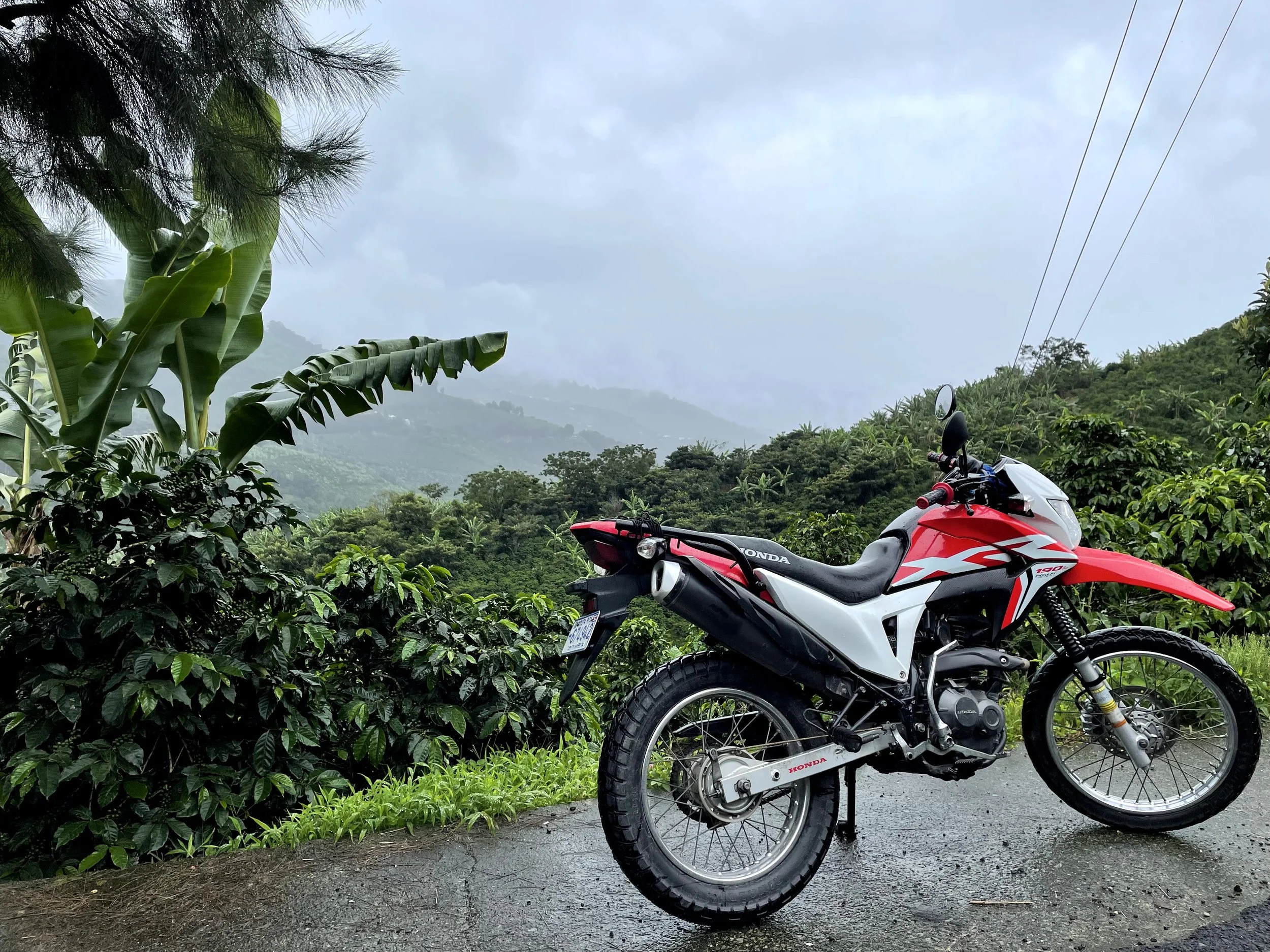
Our trusty Honda XR steed has taken us to many of these places and more!
Airport: Fly in and out of Juan Santa Maria (SJO)
Itinerary Length: 10 days, averaging 60-100 miles per day. (A quick reality check for Costa Rica backroads: on winding, unpaved mountain passes and volcanic gravel, 80 miles is rarely a casual two-hour cruise—plan for a solid 5 to 6 hours in the saddle).
Adventure Level: Rugged
Best Time of Year: December-April for the most open routes, May-October if you want some mud.
If you’ve ever dreamed of riding through jungle backroads, remote mountain passes, volcanic plains, river crossings, and wild coastlines—all in one trip—Costa Rica is your playground. This 10-day Adventure Moto Loop combines rugged terrain, jaw-dropping scenery, abundant wildlife, and the kind of remote riding that makes you wonder why you didn’t do this years ago.
This itinerary starts and ends in San José, home to the best selection of reputable rental companies, including, Costa Rica Moto (in Alajuela), and Pura Vida Motorbike (Ciudad Colon), all praised for well-maintained dual-sports, ADV bikes, and excellent service.
One Golden Rule Before You Mount Up: Remember that the sun sets reliably around 5:30 PM year-round in Costa Rica, and twilight doesn't linger. Because afternoon mists and mountain downpours roll in fast, waking up at dawn isn't just for birdwatching—it’s your safety net to make sure you pull into your lodge before dark.
Get ready for towering volcanoes, jungle single-track, fog-shrouded highlands, crocodile rivers, deserted beaches, and mountain valleys with roads rough enough to make your suspension question its life choices.
Let’s ride.
🗺️ Interactive Route Map: 10-Day Costa Rica Moto Loop
Click and drag to explore the full route, tap pins for day-by-day notes, or open it directly in your maps app.
Day 1: San José → Turrialba
Distance: ~75–85 miles
Terrain: Pavement + gravel backroads
Highlights: Coffee valleys, grand volcano viewpoints, rural villages
Kick off your ride early by heading east into Costa Rica’s agricultural highlands. Twist through coffee fields, sugarcane farms, and small mountain towns before climbing toward Turrialba Volcano, often wreathed in mist and giving you your first taste of Costa Rica’s rugged interior.
This ride holds a special place in my heart: fresh off the plane after two long years outside of Costa Rica during pandemic disruptions, I was whisked straight away on the back of the motorcycle to the stunning viewpoint of the volcano below. Of course, that came right after being caught in a sudden mountain downpour that quickly cleared into the incredible, blazing rainbow below.
Rider's Advice: Make sure to wear warm clothes and pack your waterproof layers on this part of the trip. Even if San José is blazing hot and sunny when you kick the stand up, the high-altitude mountain air drops fast, and the rain can roll in without warning.
Why riders love this day:
It’s scenic, not too technical, and eases you into the adventure while still delivering wide-open views.
Wildlife to watch for: roadside toucans, kestrels, and blue-gray tanagers.
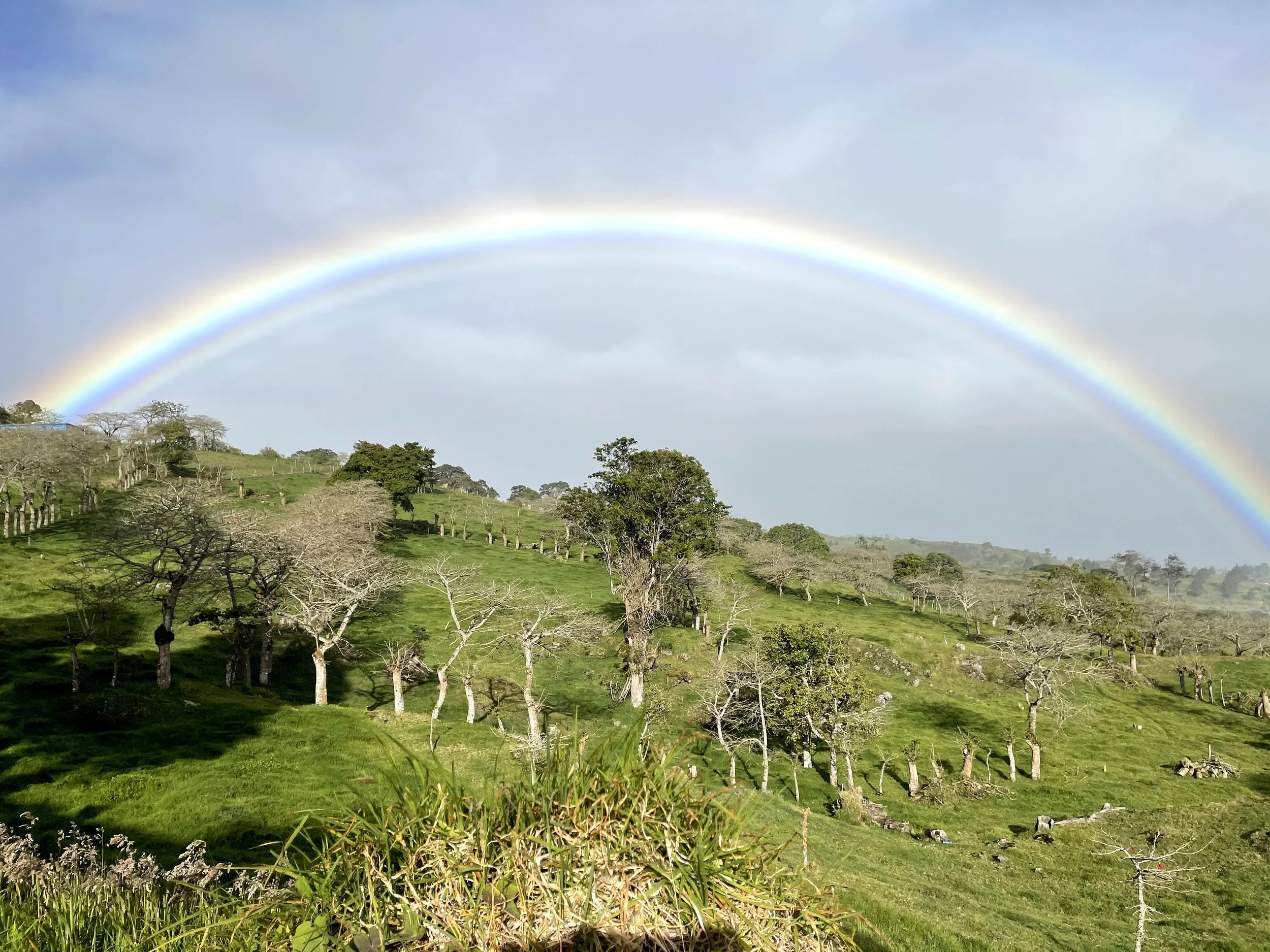
The ride to Turrialba is always magical, and the mix of mist and sun leads to some incredible rainbows.
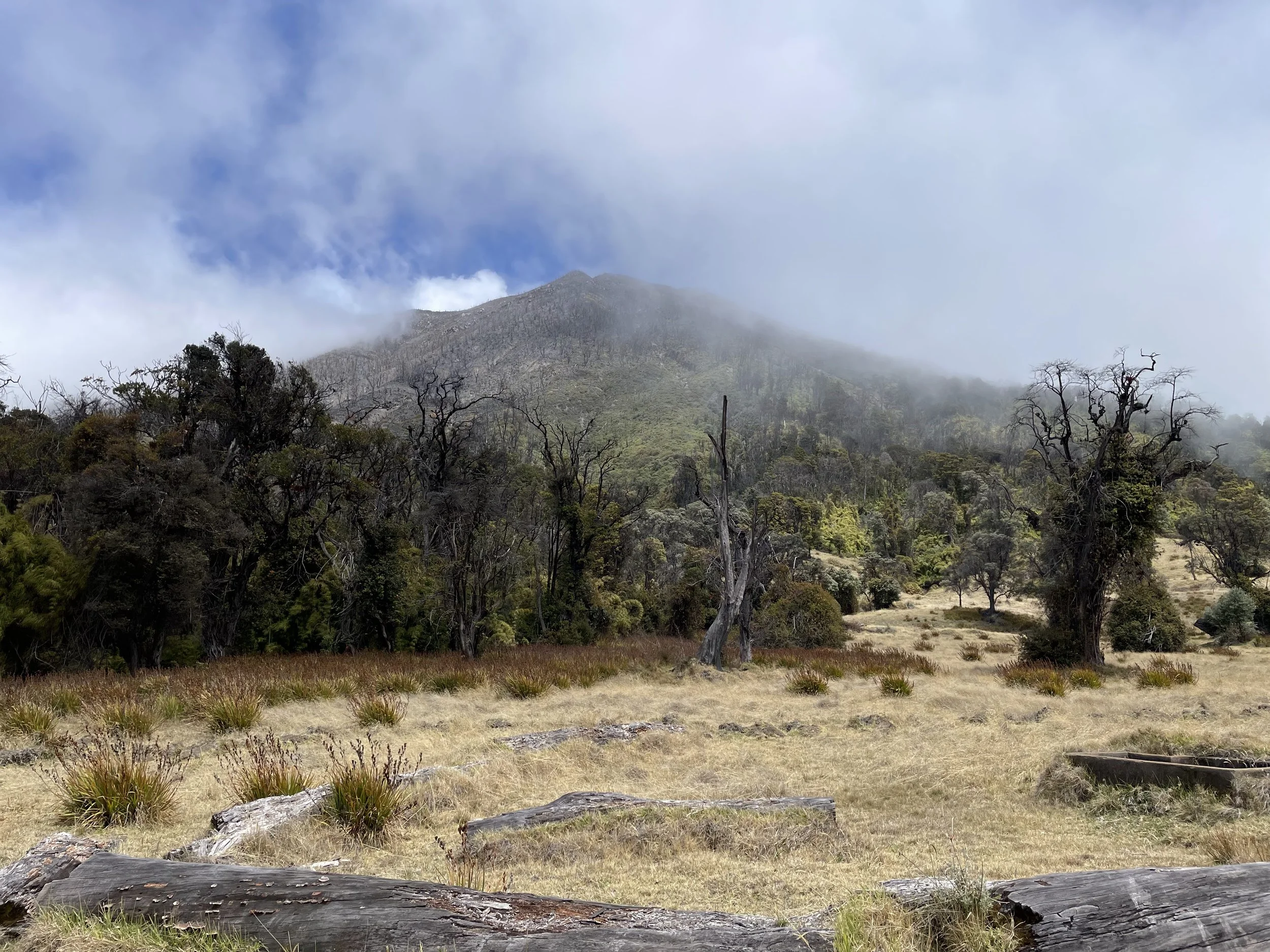
The apocalyptic like environment from recent years of explosive activity is truly incredible here.
Day 2: Turrialba → Tapantí / Orosi Valley → Cartago
Distance: ~65–75 miles
Terrain: Gravel, mountain curves, cloud forest humidity
Highlights: Tapantí National Park, Orosi lookout, rainbow eucalyptus plantations, thermal hot springs
Today is a deep dive into Costa Rica’s cloud forest ecosystem—green, dripping, foggy, and bursting with life. Tapantí-Orosi is one of the rainiest regions in the country, which means rushing rivers, slick mud, and dense, emerald vegetation hugging the trail tightly on both sides. You’ll ride past towering groves of striking rainbow eucalyptus plantations and wind deep into river valleys famous for housing some of the cleanest water in Costa Rica.
Road Update: While local infrastructure updates mean the route toward the National Park has been paved halfway, the remaining six miles or so of rough, unpaved road still deliver a fun challenge of dodging potholes and picking your line.
Why riders love this day:
It feels entirely remote, mystical, and wonderfully crisp in temperature, offering the perfect blend of winding curves and light off-road riding without feeling overwhelming.
The Ultimate End-of-Day Reward:
After a damp day in the saddle, nothing beats rolling into the Orosi Valley to soak your muscles. Hacienda Orosi Hot Springs sits right near town and makes for an incredible place to stay overnight or unwind. Tectonic-heated mineral pools, panoramic valley views, and quiet walking trails give you a touch of luxury right on the edge of the cloud forest.
Wildlife:
Resplendent quetzals, hummingbirds, coatis, and howler monkeys.
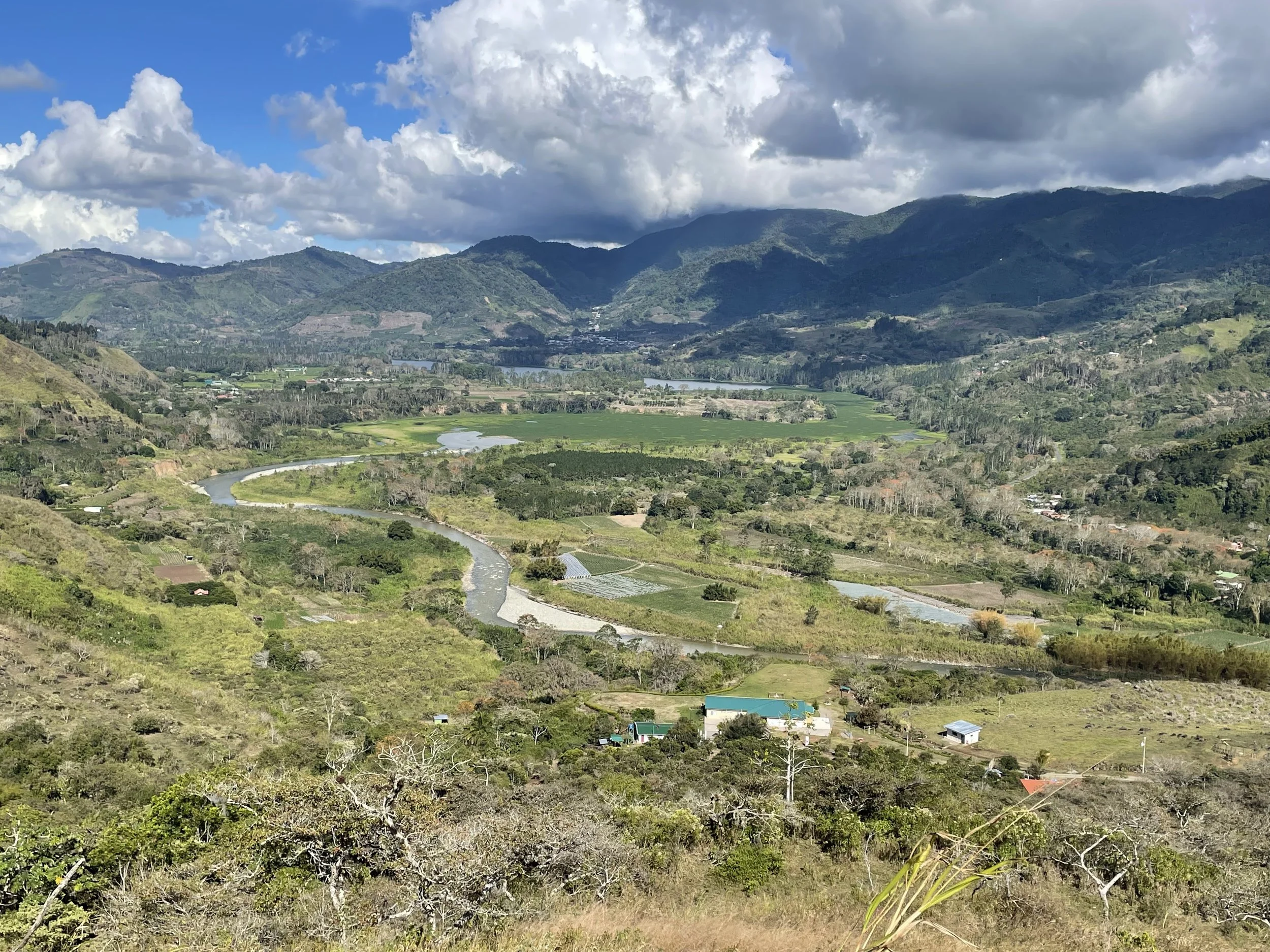
The fertile Orosí Valley from above, with the Cachí Dam Lake in the distance.
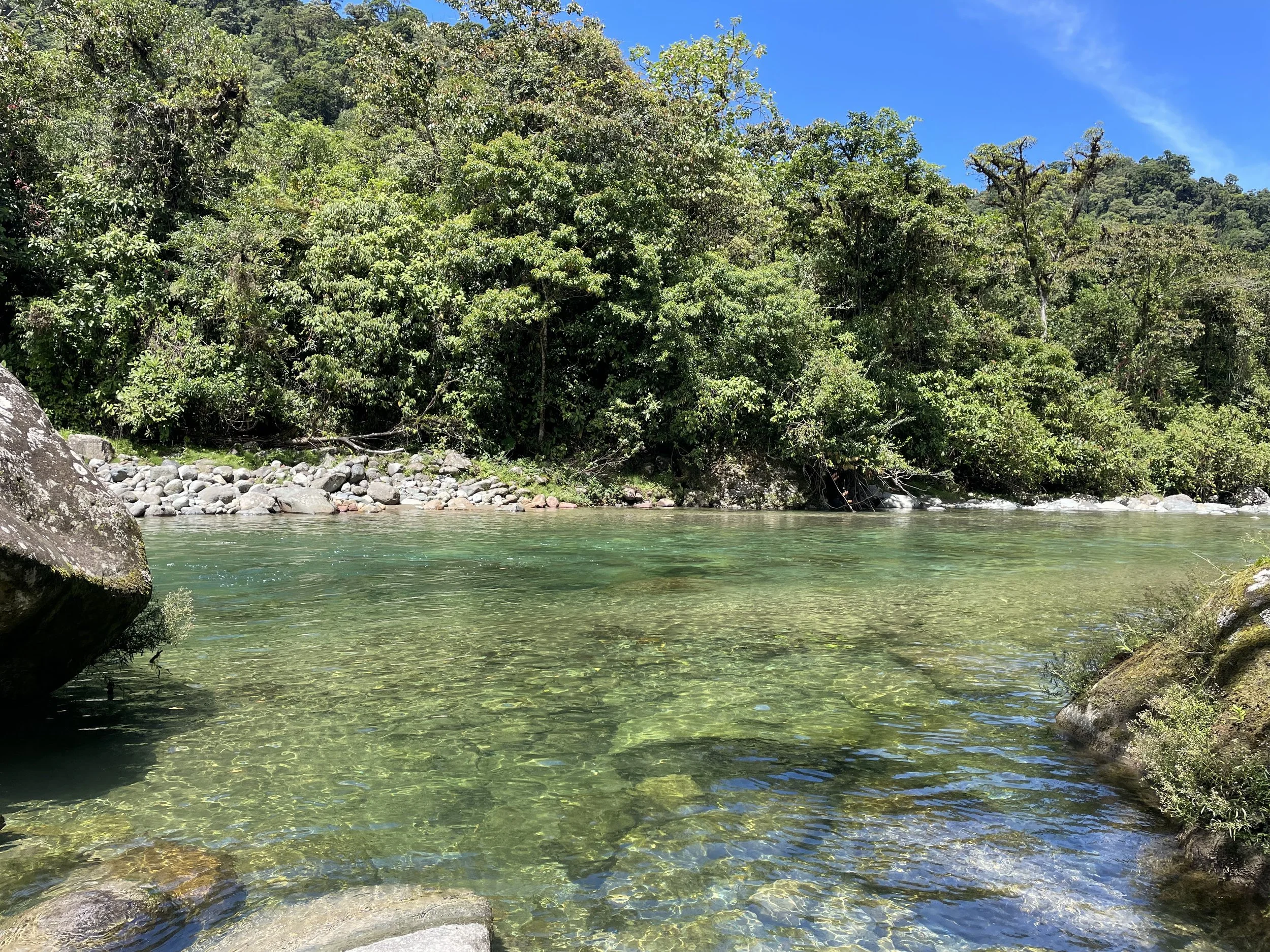
While swimming inside Tapantí National Park is prohibited, there are plenty of spots to cool off in the crystal clear waters just below the park entrance.
Day 3: Cartago → Irazú Volcano → Vara Blanca
Distance: ~80 miles
Terrain: Pavement + gravel ridges
Highlights: The highest volcano you’ll ride to, panoramic ridgelines
Climb from Cartago—passing right by the historic Basílica de Nuestra Señora de los Ángeles—up toward Irazú Volcano, Costa Rica’s highest at 11,260 ft. You will feel that altitude immediately: the wind up top is brisk, and the landscape opens into eerie, windswept, moonlike ash fields. Watch for massive "poor man's umbrella" plants lining the route (handy if the mountain mists turn to rain) and enjoy the view where, on a clear morning, you can see both oceans.
Rider’s Tip & Warm-up: Hit this climb early before the midday clouds roll in. On your way down, stop at Sueños Del Irazú restaurant for a cozy atmosphere, local dishes, and a hot cup of coffee to shake off the high-altitude chill.
After descending through winding dairy country, head toward Vara Blanca, a region of waterfalls, rolling hills, and misty forest roads. Stay in a mountain chalet and wake up to views of the entire valley below.
Wildlife: grazing dairy cows, gray foxes, and highland birds like the black guan.
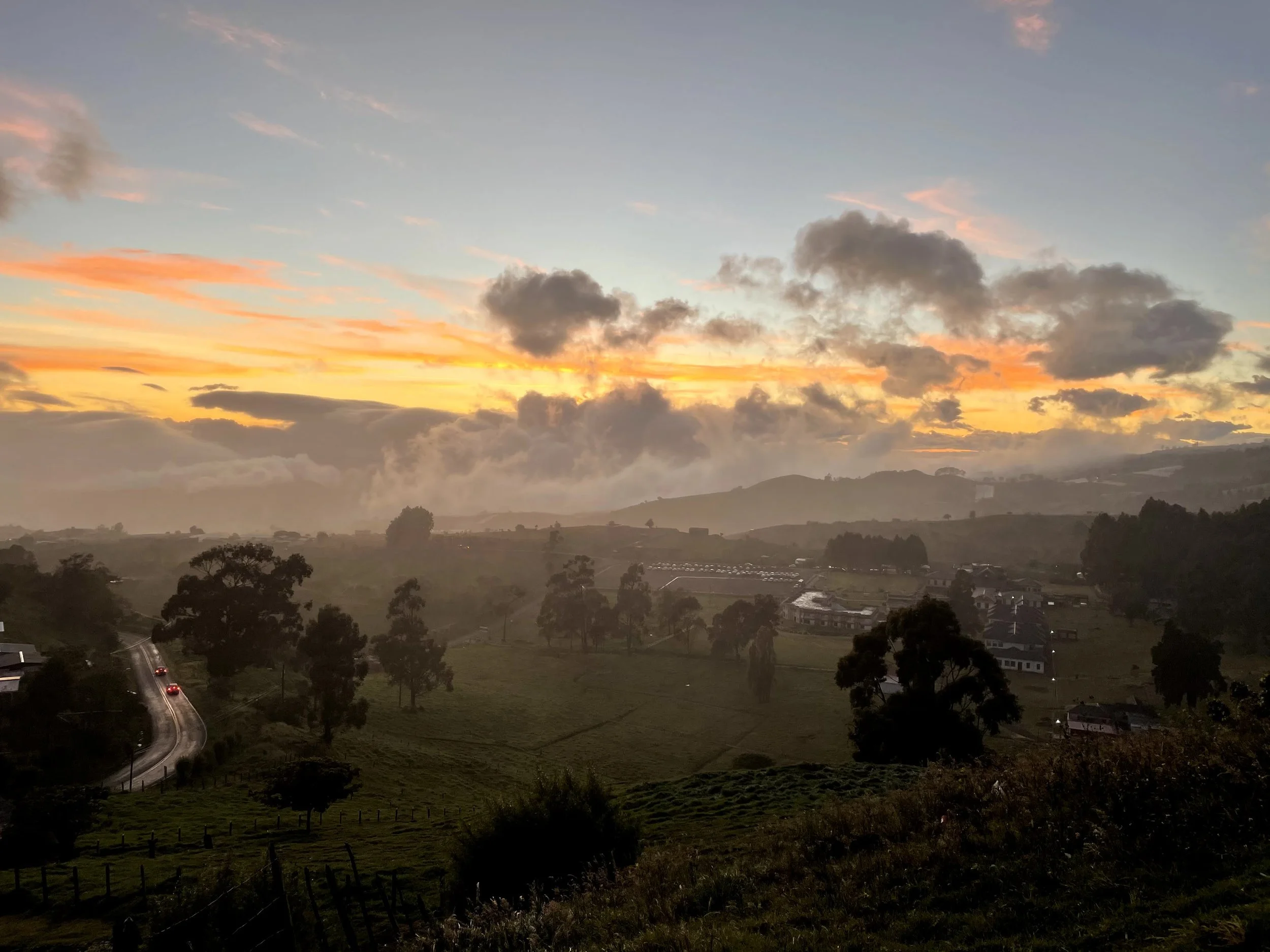
The view at sunset from the winding road down the Irazu Volcano.
Day 4: Vara Blanca → Sarapiquí
Distance: ~50–60 miles
Terrain: Gravel, jungle backroads, river valleys
Highlights: Waterfall country, rainforest lodges, humid lowlands
Drop from the cool highlands into the warm, thick jungles of Sarapiquí, known for wildlife, rafting rivers, and muddy off-road tracks that get adventurous fast. Check out the Lapa Verde Refuge to see flocks of green macaws flying overhead.
Riders love: rougher terrain, warm temperatures, and the first real “jungle riding” feeling of the trip.
Wildlife: green macaws, poison-dart frogs, sloths, and kinkajous.
Day 5: Sarapiquí → Arenal / La Fortuna
Distance: ~45–55 miles
Terrain: Mixed pavement + gravel loops
Highlights: Arenal Volcano, hot springs, hanging bridges
Ride northwest to La Fortuna, home of the iconic Arenal Volcano. This area has tons of optional backroad loops—muddy tracks, river splashes, and gravel climbs. Stop at the free hotsprings “El Choyin” on the side of the road for a dip in a natural river and a taste of local Fortuna. If you’re looking to add a day to the itinerary, take a loop around Lake Arenal, the largest freshwater lake in Costa Rica.
Perfect for: riders who want a bit of technical terrain before a luxury hot-springs soak.
Wildlife: toucans, howlers, coatis, and the famous blue morpho butterfly.
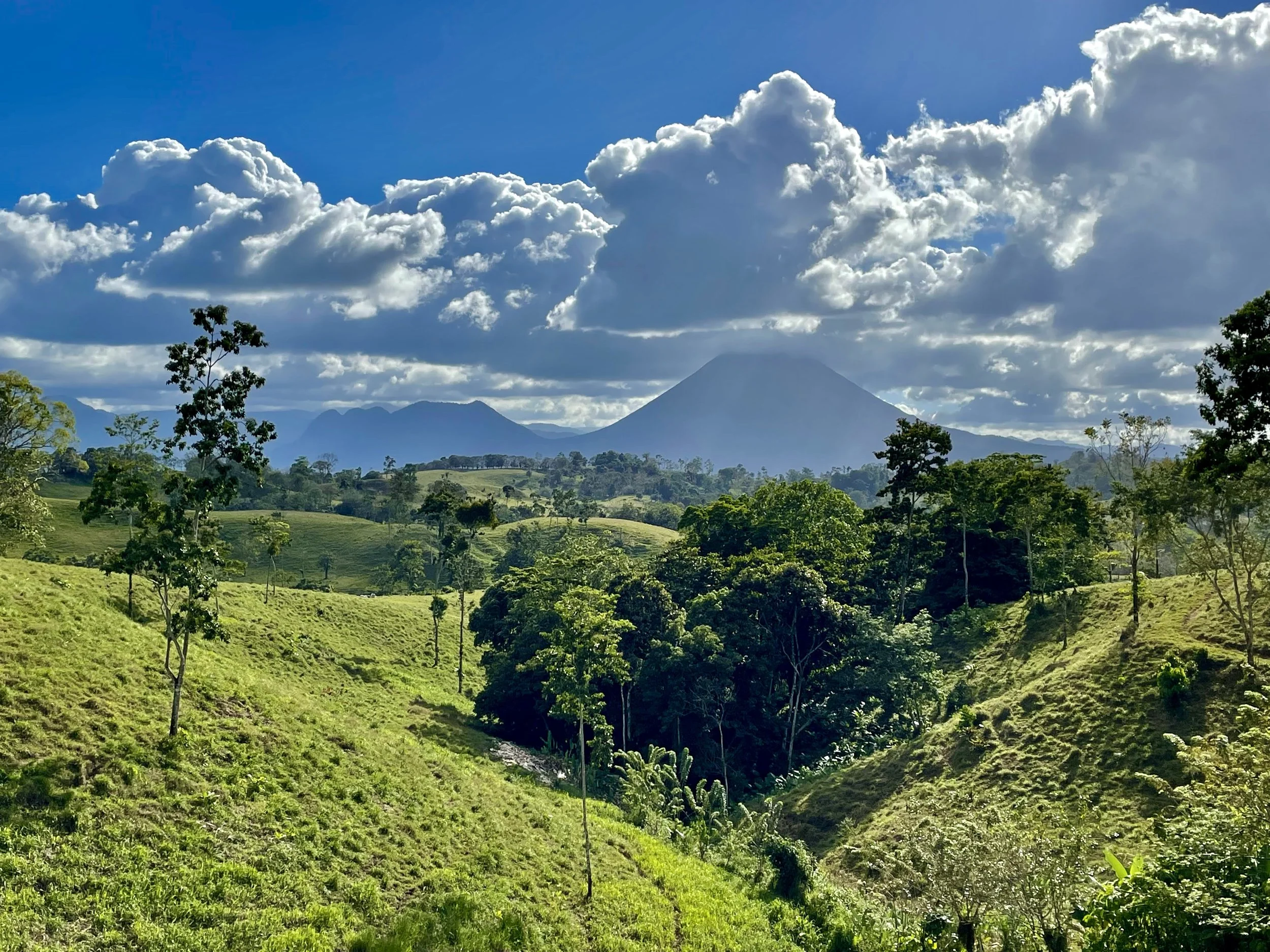
The road between La Fortuna and Rio Celeste gives a new perspective on the giant Arenal cone volcano.
Day 6: Arenal → Tenorio → Río Celeste → Bijagua
Distance: ~60–70 miles
Terrain: Gravel, river crossings, clay mud if wet
Highlights: The Rio Celeste waterfall, Tenorio Volcano National Park
This is a favorite among ADV riders. The roads around Tenorio National Park are rural, rugged, and incredibly scenic. Stop at Rio Celeste, famous for its surreal blue water caused by volcanic minerals. Bijagua is a sleepy local town, so make sure to book accomodations early.
Wildlife: tapirs (yes, you really can see them here), agoutis, and trogons.
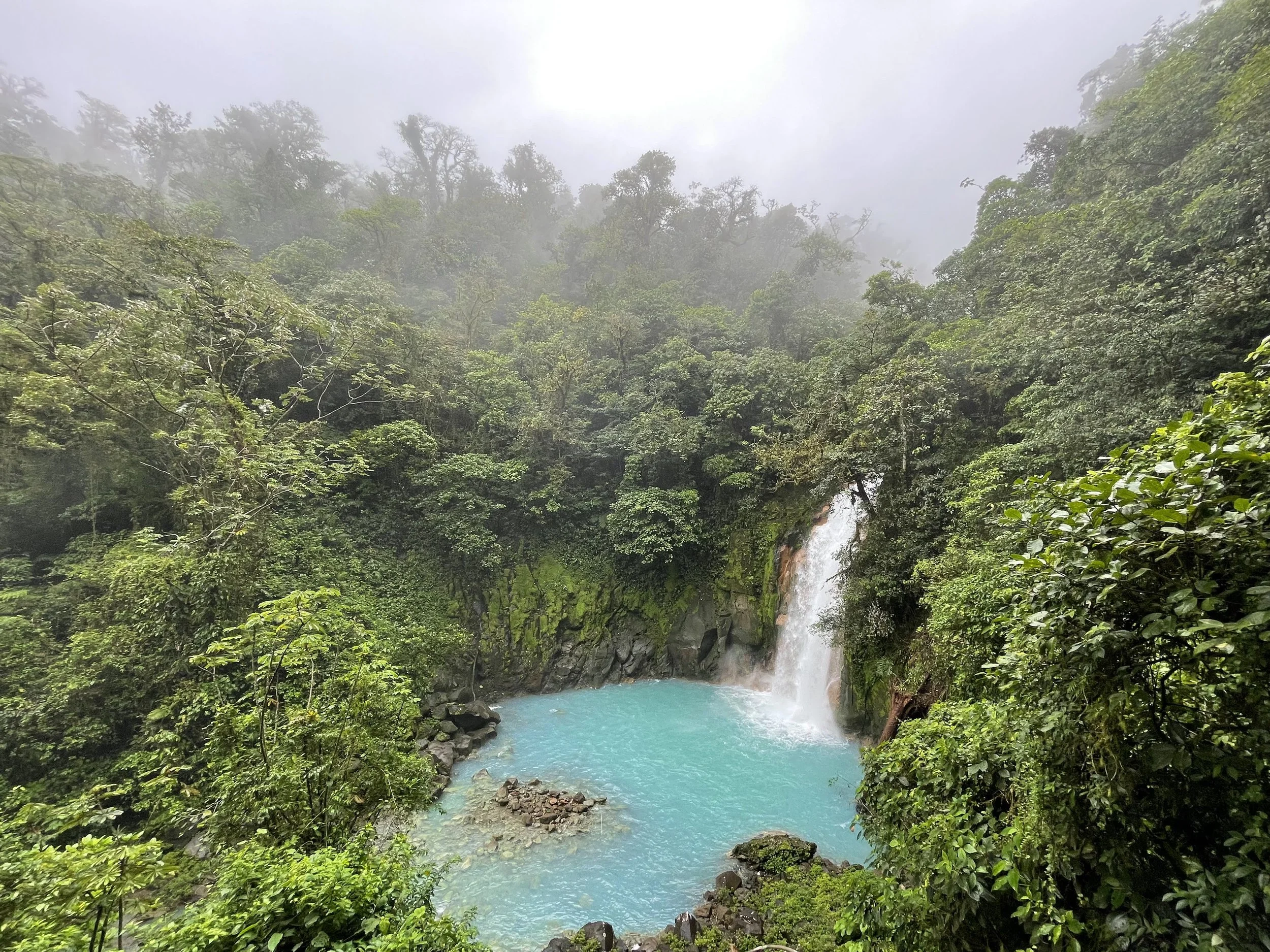
The iconic Rio Celeste Waterfall as seen from above.
Day 7: Bijagua → Miravalles → Liberia
Distance: ~70 miles
Terrain: Off-road geothermal areas + rural backroads
Highlights: Fumaroles, bubbling mud pots, wide savanna plains
Ride through the volcanic foothills of Miravalles, one of Costa Rica’s most active geothermal zones. Expect open dirt roads, cattle trails, and views stretching across the Guanacaste plains. Catch a good seafood dinner in Liberia, pick up some souvenirs and get a solid rest before your next adventure day.
Wildlife: hawks, deer, whistling ducks, and sometimes coyotes.
Day 8: Liberia → Santa Rosa National Park → Tamarindo
Distance: ~85 miles
Terrain: Sandy trails, coastal dirt roads, dry forest
Highlights: Wild coastlines, pristine beaches, sea turtles
This is the “classic Guanacaste ride.” Santa Rosa National Park has some of the last remaining tropical dry forest on Earth. The roads are sunny, sandy, and wild. This is also one of two places in Costa Rica where thousands of sea turtles come to lay their eggs seasonally.
Finish in Tamarindo for beers and ocean views and a fun night out on the town.
Wildlife: howler monkeys, iguanas, deer, and seasonal turtle nesting.
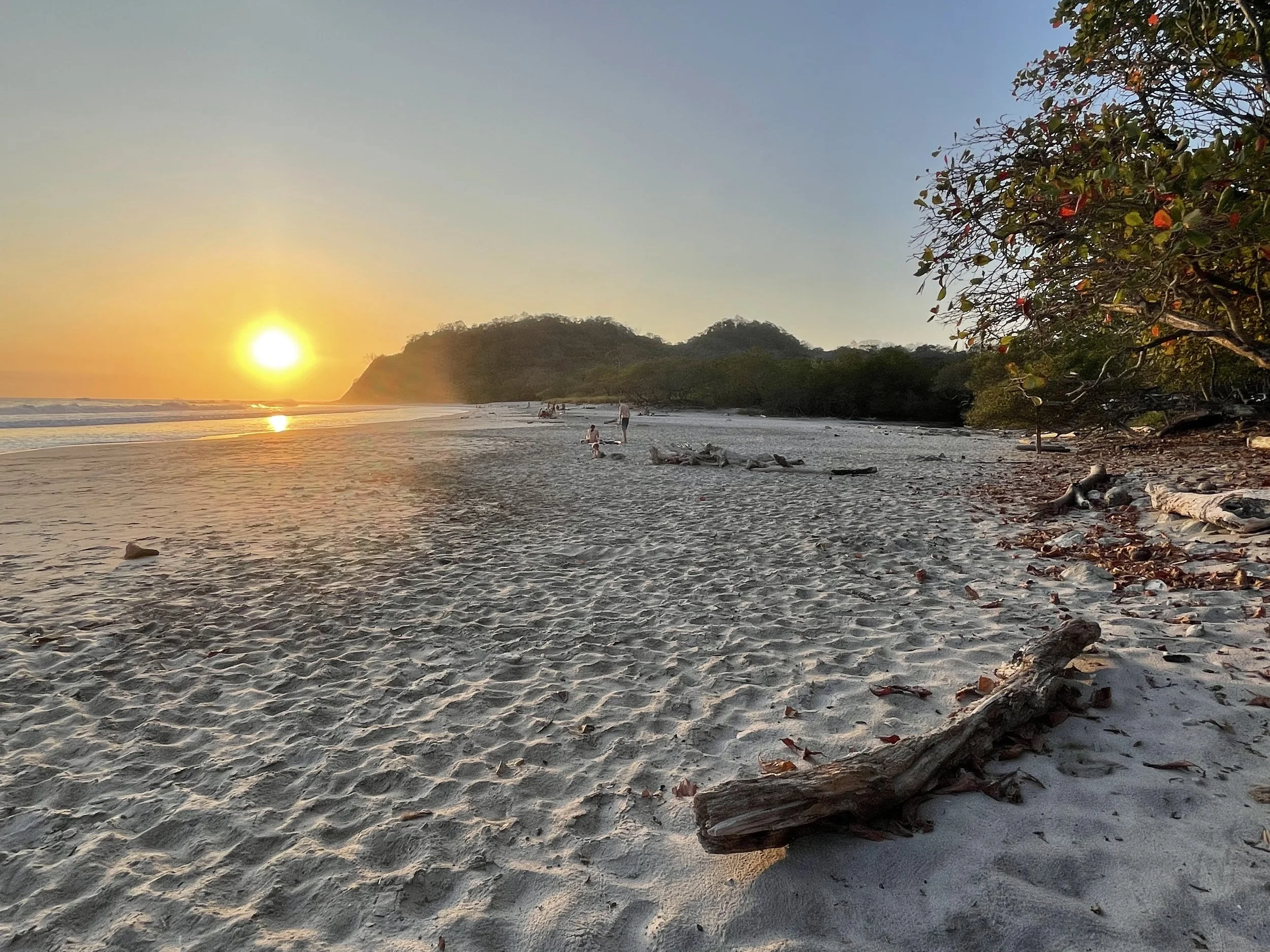
The sun sets over Samara Beach's white sands and dry rainforest.
Day 9: Tamarindo → Nicoya Peninsula → Sámara
Distance: ~60–70 miles
Terrain: Dry forest dirt, river crossings, coastal ridges
Highlights: Remote beaches, artisanal towns, surf culture
Ride south along the Nicoya Peninsula, choosing either riverside backroads or scenic coastal ridges. Sámara is laid-back, safe, beautiful, and full of good food. A highly reccomended beach stop down a dusty dirt road is Barrigona Beach.
Wildlife: pelicans, frigate birds, crocodiles in lower rivers.
Day 10: Sámara → Nicoya → Route 18 → Pan-American Highway → San José
Distance: ~120 miles
Terrain: Pavement back to the city
Highlights: Mountain curves, coffee stops, rural towns
Your final day brings you back into the highlands on sweeping pavement. Plenty of spots for coffee, roadside ceviche, and photos.
Return the bike, grab a cold Imperial, and toast to 10 days of absolute adventure.
Why This Loop Is Special
Starts where the best rental shops are (San José Greater Metropolitan Area)
Avoids tourist highways and prioritizes rural backroads
Mixes volcanoes, jungles, coastal dirt, and highland ridges
No dangerous river crossings or illegal shortcuts
Perfect balance of technical challenge and scenic flow
FAQ
1. Do I need off-road riding experience for this adventure moto itinerary?
Some experience is recommended. The route includes gravel, mud, river crossings, and steep backroads. Beginners can complete it, but confidence on uneven terrain makes the trip much more enjoyable.
2. What type of motorcycle is best for this 10-day Costa Rica route?
A dual-sport or adventure bike (250–700cc) is ideal. The terrain varies from smooth pavement to rugged trails, so a bike with decent suspension and dual-sport tires is recommended. Honda’s are easy to find and Costa Rica has plenty of mechanics familiar with their repairs if it comes to that.
3. When is the best season to ride this Costa Rica moto loop?
December–April is the dry season and offers the best road conditions. May–October is the rainy season, which means muddier trails and more river flow—great for thrill-seekers, but more challenging.
4. Can I ride this itinerary solo, or do I need a guide?
You can absolutely ride it solo if you're comfortable with navigation and basic bike repairs. A guide is helpful if you want backup support, wildlife insight, or help navigating rural shortcuts.
5. What gear should I bring for this multi-day moto trip?
A good helmet, armored riding jacket and pants, waterproof layers, hydration pack, tool kit, spare tube, sunscreen, and mosquito repellent. If riding in rainy season, pack extra dry bags and chain lube.