
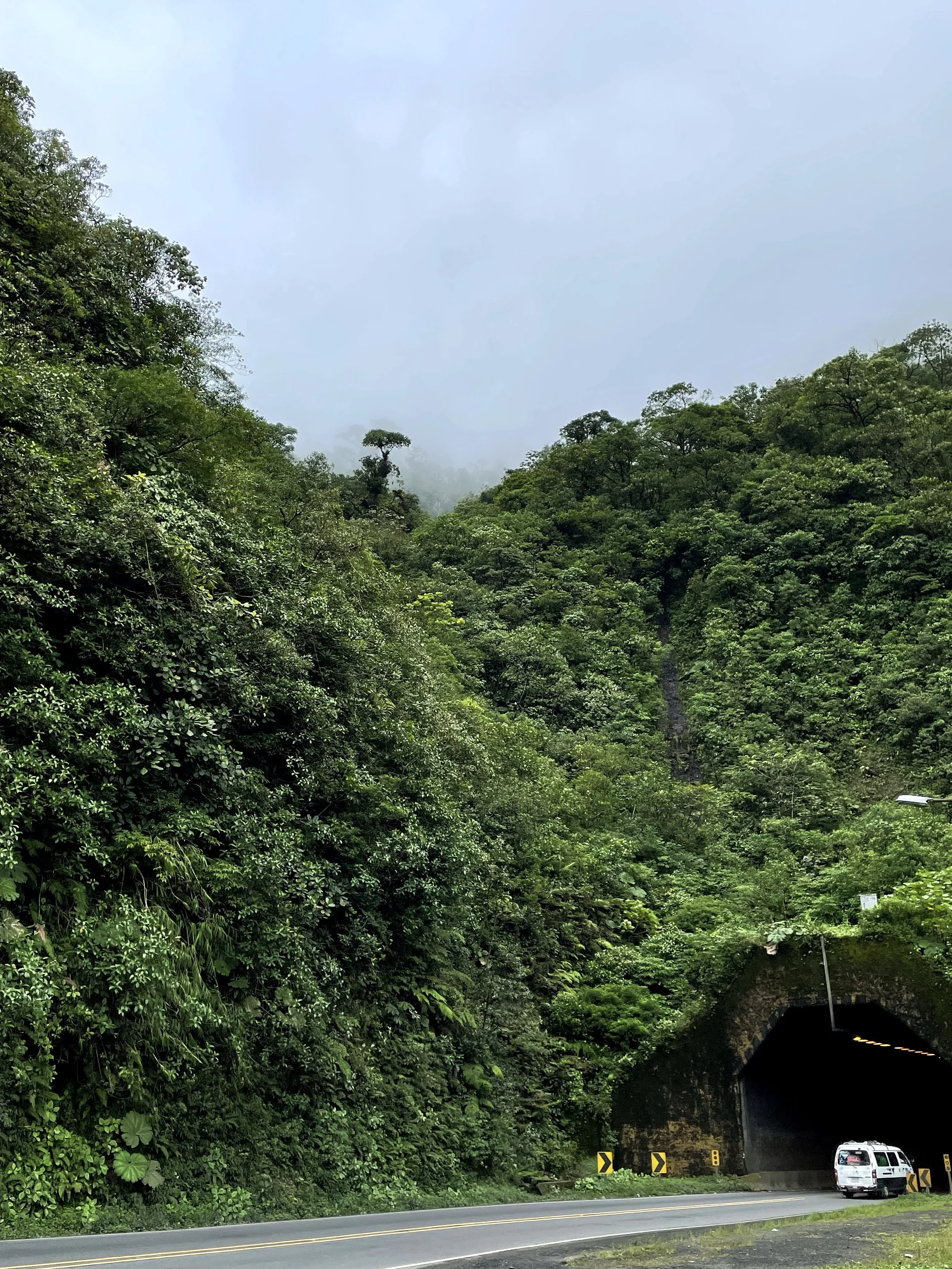
Route 32: A Survival Guide
If you’ve been reading the forums or scanning travel groups, you’ve likely seen the warnings about "Route 32." For many travelers, the drive from San José to the Caribbean coast is the most intimidating part of their entire Costa Rica itinerary. My mom still talks about holding her breath as a tractor trailer blew by us without a passing lane headed downhill, three years ago. Between the winding mountain passes, the heavy cargo trucks, and the legendary mountain fog, it’s a route that demands respect.
The Bottom Line: Is Route 32 safe? Yes. But it isn't a casual drive. It is a major mountain highway and a vital freight corridor that requires your full attention. In my 10 years of traversing this road, I’ve learned that the secret to a stress-free trip is your timing.
The Golden Rule: Timing is Everything
The conditions on Route 32 can change within minutes. If you leave San José at 6:00 AM, you are driving a majestic mountain route with clear visibility. If you leave at 3:00 PM, you are potentially navigating thick fog, heavy rain, and slow-moving truck traffic as darkness falls.
My #1 piece of advice: Leave San José by 7:00 AM sharp. That way you’ll get a chance to dip your toes in the water before dark.
What to Expect on Route 32
The drive consists of two distinct stages: the mountain climb through Braulio Carrillo National Park and the descent into the Caribbean lowlands.
Braulio Carrillo (The Climb): Narrow curves, steep drops, and thick cloud cover. Keep your headlights on. Fog rolls in fast here; do not rely on your daytime running lights. Occasional mudslides will close sections of the road for hours at a time, that’s why its best to use Waze for the most up to date road information. There is also a Facebook Group which is updated very frequently with the latest road closures and news.
The Lowlands (The Descent): Flat, straight, but heavy truck traffic (Limón Port bound) and sneaky motorcycles winding through traffic. Don’t force a pass. Trucks are slow, but they are heavy. Wait for a clear, marked passing lane. This area has also been under construction for expansion for several years which can sometimes cause delays in this part.
Safety Checklist
Bring a jacket, the mountains just after the tunnel out of San Jose can be surprisingly chilly. As you descend into tropical paradise, you’ll want to rip that jacket right off, but if you get stuck near the top, its nice to have.
Download your Waze map ahead of time, cell service is often lacking through the National Park. Google Maps is a good second option, but Waze really is the way to go.
Bring water and snacks - there are zero rest stops through the mountain region and even the gas stations in the lowlands lack snack options.
Rent A Car, Hire a Private Shuttle or Take a Public Bus?
Choose your own adventure!
Public Bus:
I have taken the public bus to Puerto Viejo and beyond several times and only once did someone hand me a kitten to sit on my lap for the 7 hour drive. The public bus company is called MEPE and leaves from the Coca Cola neighborhood in Central San Jose. The bus is about $13 one way and stops once in Limon central for about 10 -15 minutes for bathroom/food breaks. The bus is not air conditioned, but is an excellent way to get to know Costa Ricans intimately. Keep your bags with you at all times, and do not load them below the bus or above your seat for maximum assurance that you arrive with your underwear.
Shared or Private shuttles:
Interbus is a perfectly viable, if not expensive ($70 p/p for a shared shuttle, $350 for a private shuttle) option of getting to the coast. They are a bit more comfortable than the public bus with air conditioning and less people. They will often drop you off right in front of your accomodation and if staying in Cahuita or Puerto Viejo, there are plenty of options to move around once the shuttle drops you off. Tuks Tuks, Bike Rentals, Taxi or Pirata (unofficial taxis) are all great options for getting around without a car. There are also local buses that move between Cahuita, Puerto Viejo, Manzanillo but they run infrequently.
Renting a car:
Renting a car gives you a bit more freedom to move up and down the coast and off the beaten path, but you must be a brave driver to risk route 32. During the off season (May-October) weekly car rentals can sometimes be cheaper than or at par with the private shuttle option. Costa Rican car rental companies will require proof of insurance or pay their full coverage insurance which is not often included in the original reservation cost and will drive up the price significantly. I’ve always gotten around this using Mastercard benefits with my credit card and providing them with the Master Rental Eligibility Certificate.
Ready to Explore the Caribbean Coast?
Once you navigate the twists and turns of Route 32 and descend into the lowlands, the Caribbean magic truly begins. Whether you’re heading toward the laid-back rhythm of Puerto Viejo or the lush trails of Cahuita, there is so much to explore beyond the highway. Check out my Caribbean Coast Hub for a complete breakdown of the best activities, local dining spots, and hidden gems waiting for you once you arrive.